

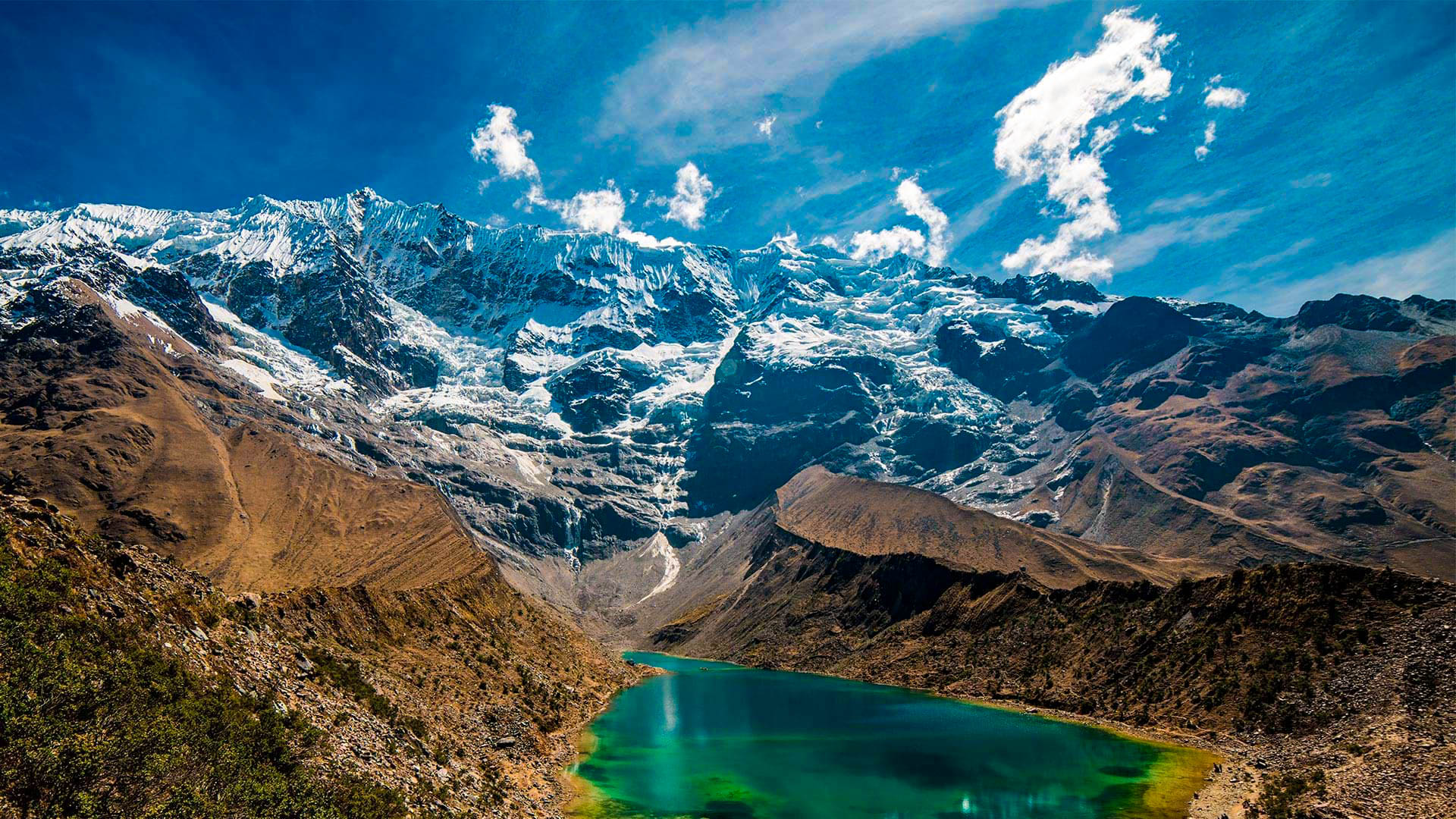

The Ancestral Secret that Survived the Inca Empire
Ausangate has been revered since ancient times as an Apu, a protective spirit that watches over communities, feeds the rivers with its waters, and connects the sky with the earth. Here you will find everything you need to live this experience: how to get there, what to see, when to go, and why it is one of the most demanding and symbolic treks in Peru.
What Is Ausangate Mountain?
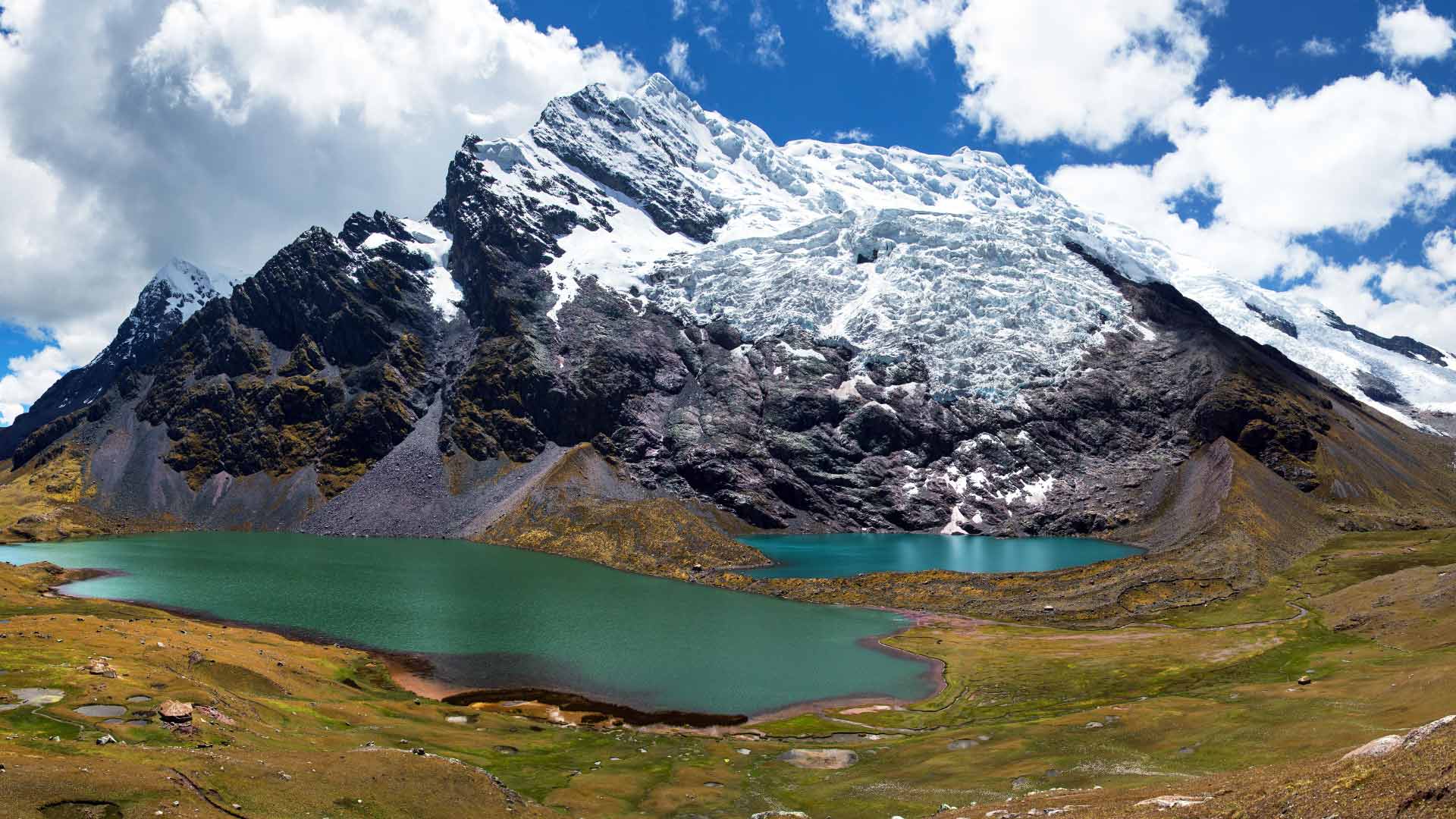
It is a colossal, massive, and majestic snow-capped mountain with a 100-km extension. It rises to 6,384 m a.s.l., making it the fifth highest mountain in Peru. It is located in the Vilcanota range, southeast of Cusco, surrounded by valleys, glacial lakes, and Quechua communities that keep their traditions alive.
🗣️ Meaning of “Ausangate”
The word comes from Quechua and Aymara “Awsanqati,” meaning cave or hollow in the cliffs. The name is associated both with the shape of the mountain and with the ancient Andean myths that surround it.
✨ Why is it so special?
- It has been a sacred Apu since pre-Inca times
- It protects and nourishes nearby communities
- It is a natural source of energy for those who believe in the spiritual connection with the mountains
- It is the stage for one of the most spectacular treks on Earth
📍 Location
- Altitude: 6,384 m a.s.l.
- Distance from Cusco: 110 km to the southeast
- Between: the valleys of the Vilcanota and Tinquimayo Rivers
- Districts: Ccatca, Ocongate, and Marcapata
Climate and Temperature
The weather is cold all year:
| Time of Day | Temperature | Conditions |
|---|---|---|
| Sunny day | Up to 20 °C | Pleasant for hiking |
| Night | 5 °C or lower | Thermal gear required |
| All day | Variable | Strong winds at any time of day |
📅 Best time to visit:
- May to September: dry weather, safer routes, clear skies
- November to March: rains that make the trail more difficult
How to Get There
🚶 On your own
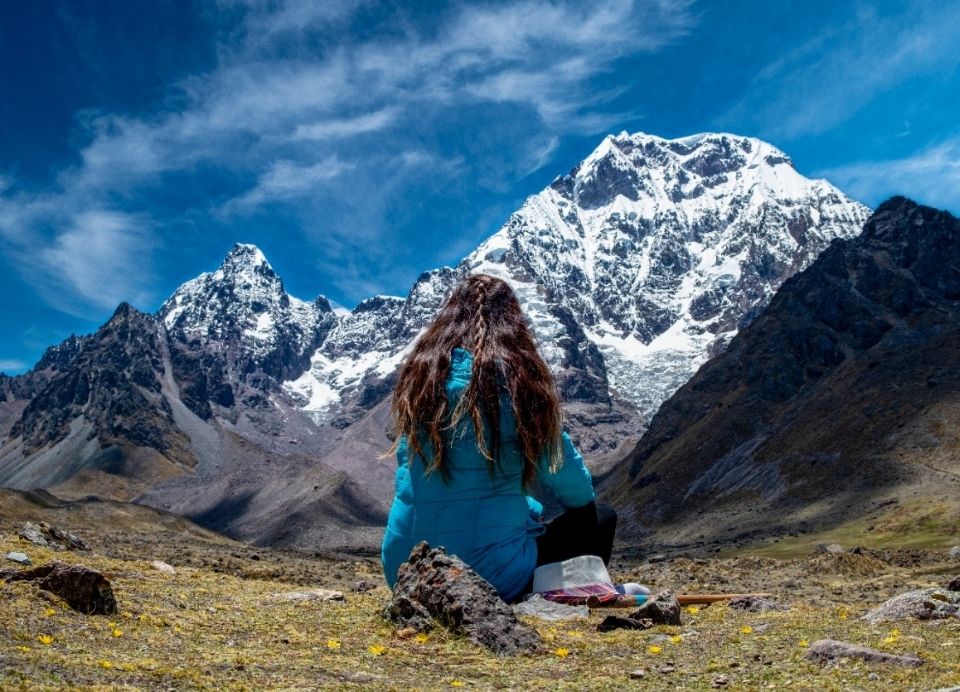
From Cusco, take a bus or colectivo at the Coliseo Cerrado de Huayruropata heading to the town of Tinqui (3–4 h). Or take a bus toward Mazuco and get off in Ocongate. From there, choose to walk or rent horses.
🚐 With an agency
Includes transportation, guide, meals, and camps. Ideal for those who want safety and organized logistics.
History and Cultural Importance
🌄 Before the Incas
Five thousand years ago, the Cuyos ethnic group settled in the area to control access to Antisuyo. They maintained trade with Amazonian peoples and cultures such as Wari and Tiahuanaco.
🏺 Pre-Inca period
Ausangate was a principal huaca of Collasuyo. It was believed that souls departed from there to Lake Siwinacocha before being reborn. Priests asked the Apu for water and protection.
☀️ Inca period
The Inca Yahuar Huacac conquered the Cuyos. The cult of the god Inti was integrated, and veneration of Ausangate was strengthened. Offerings of chicha, coca, and, at times, sacrifices of camelids and humans (Capacochas) were performed.
⛪ Colonial period
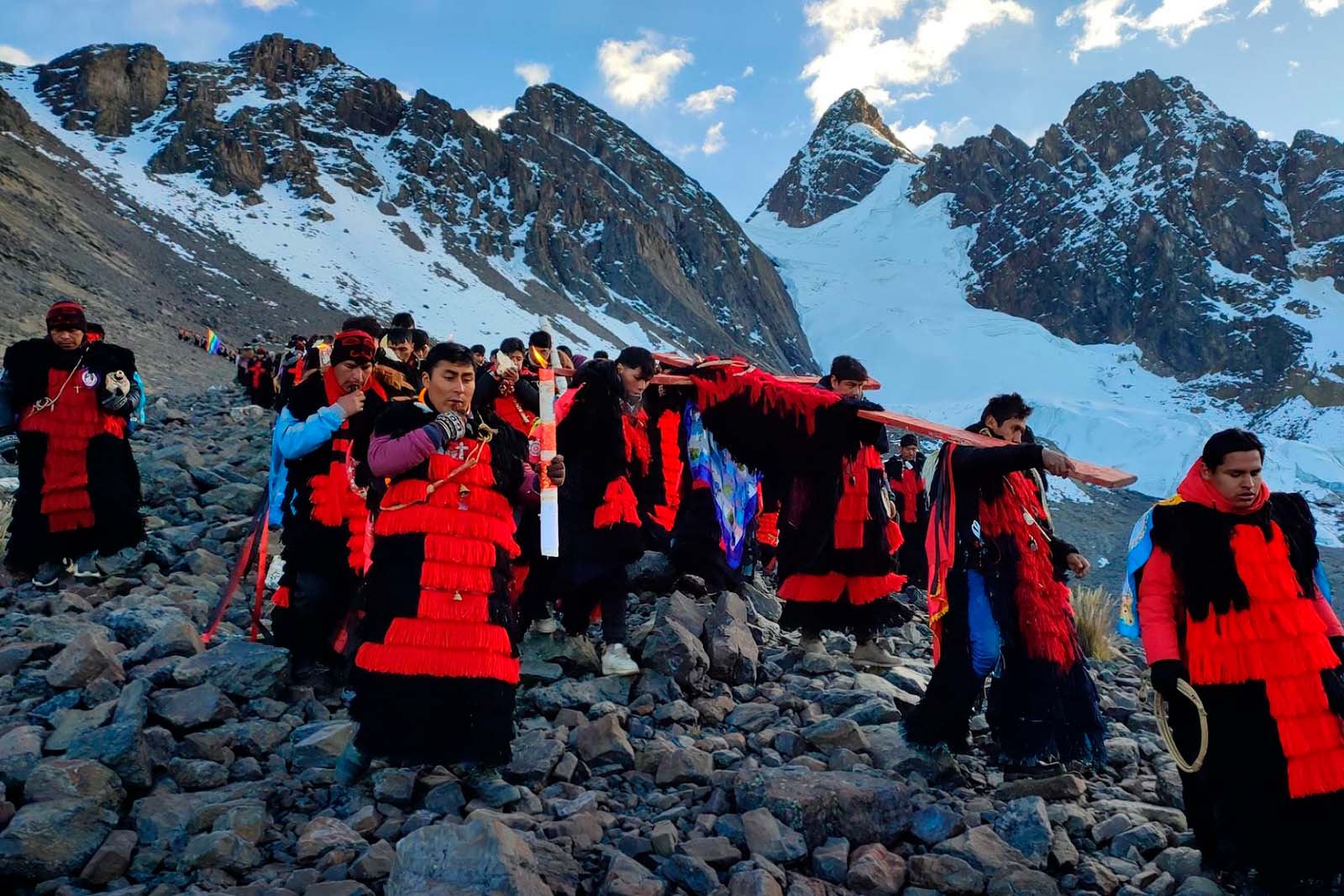
The Cuyos were displaced, but they continued to trade along routes between Collao and Paucartambo. The festival of the Lord of Qoyllur Rit’i emerged, where Christian devotion fused with veneration of the Apu.
🧗 First Mountaineers
Legends of Ausangate
According to Andean tradition, Salkantay and Ausangate were brothers. During a great drought, Salkantay traveled north and Ausangate south. The latter found abundant food in the high plateau and brought it back to save the people of Cusco.
Tourist Activities
Route Recommendations
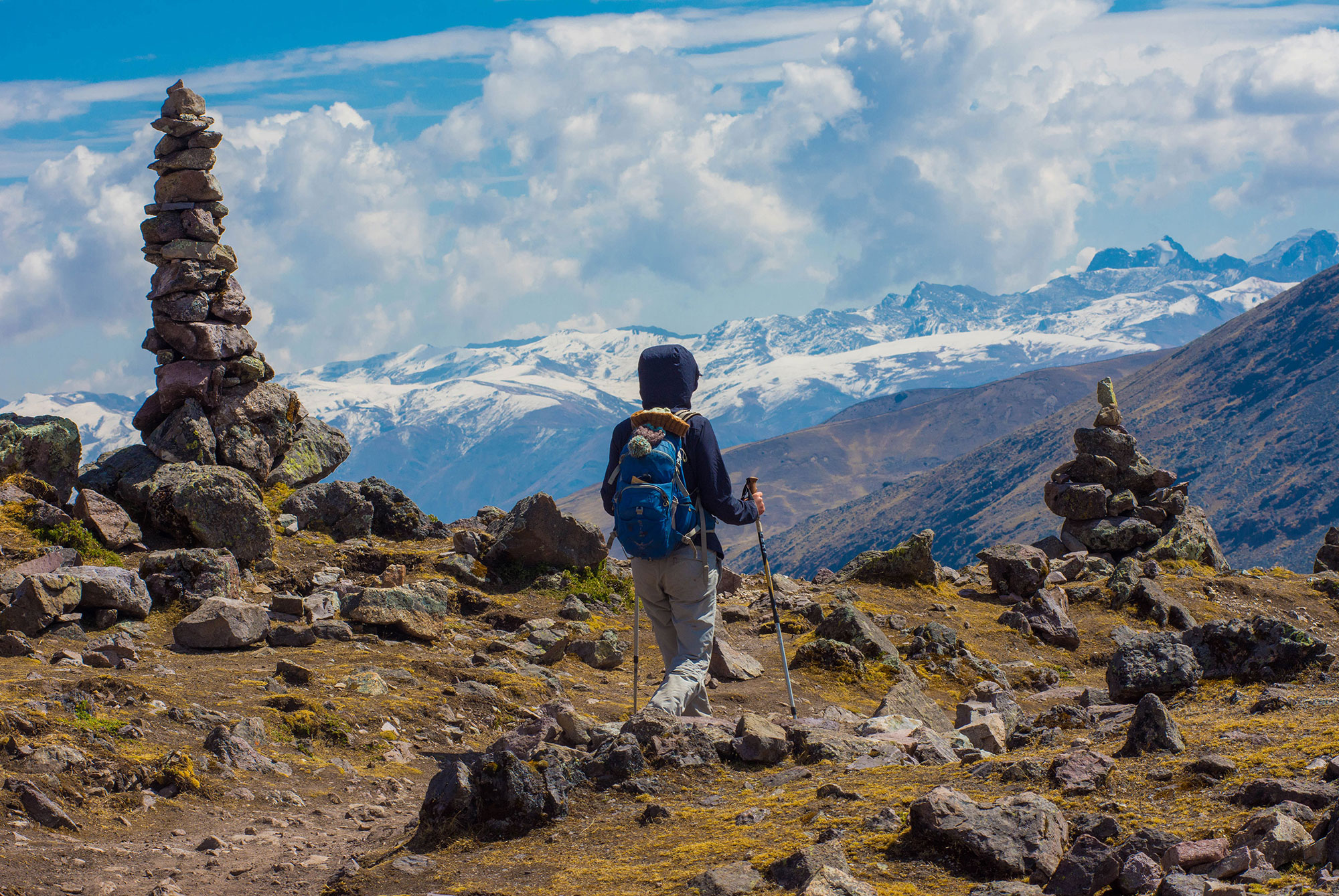
🗺️ Recommended routes:
- Complete trek around Ausangate, crossing passes over 5,000 m a.s.l.
- Combine with Rainbow Mountain
- Hire an agency for logistics, guides, and safety
What to See in Ausangate
🏞️ Landscapes

Seven Lakes circuit: Azulqocha, Orco Otorongo, China Otorongo, Puqacocha, Alqacocha, Qomercocha, and Patacocha.
Hanging glaciers.
Views of mountains such as Mariposa, Jampa, Pucapunta, Caracol, and Tinke.
🦙 Wildlife
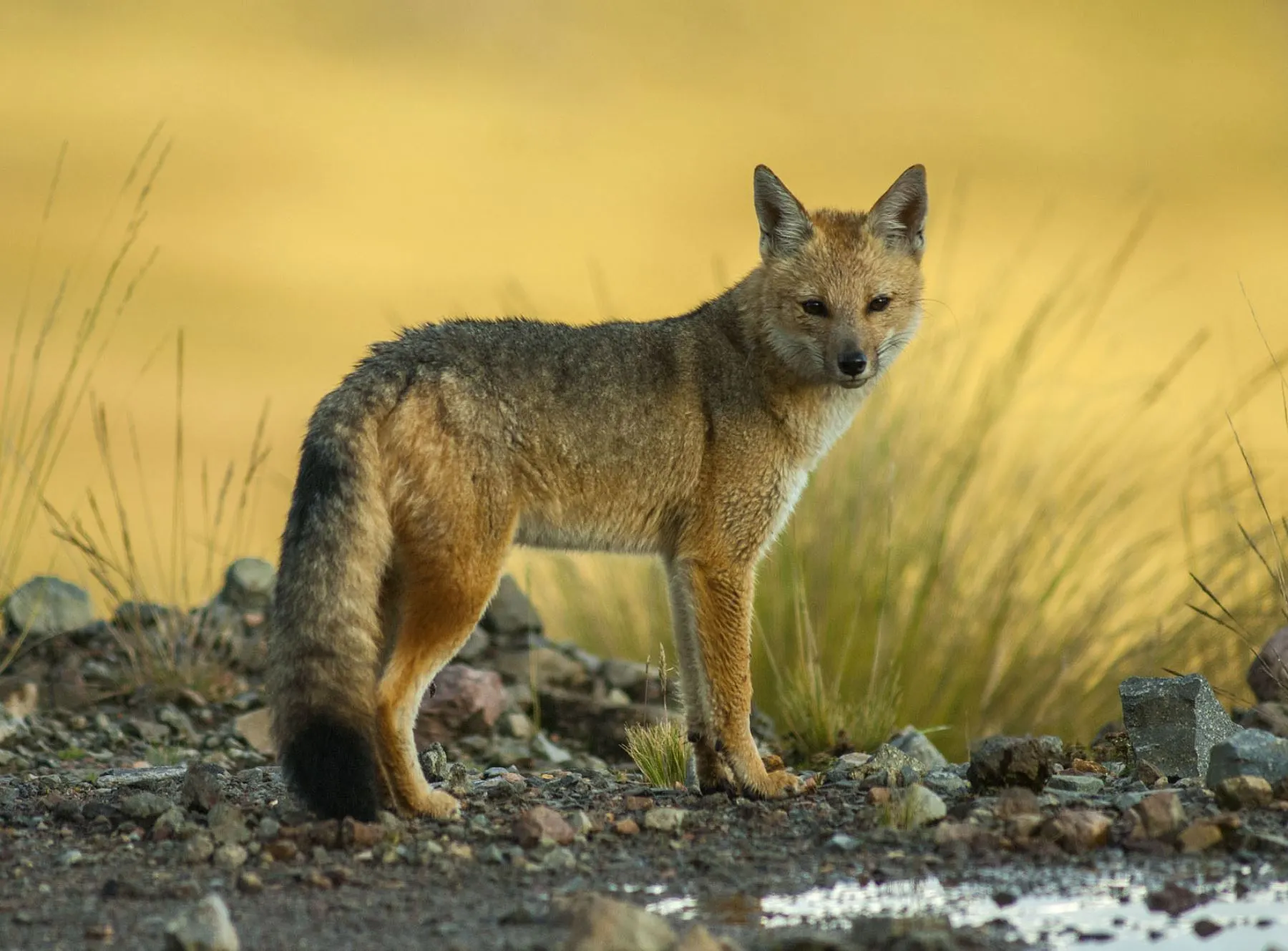
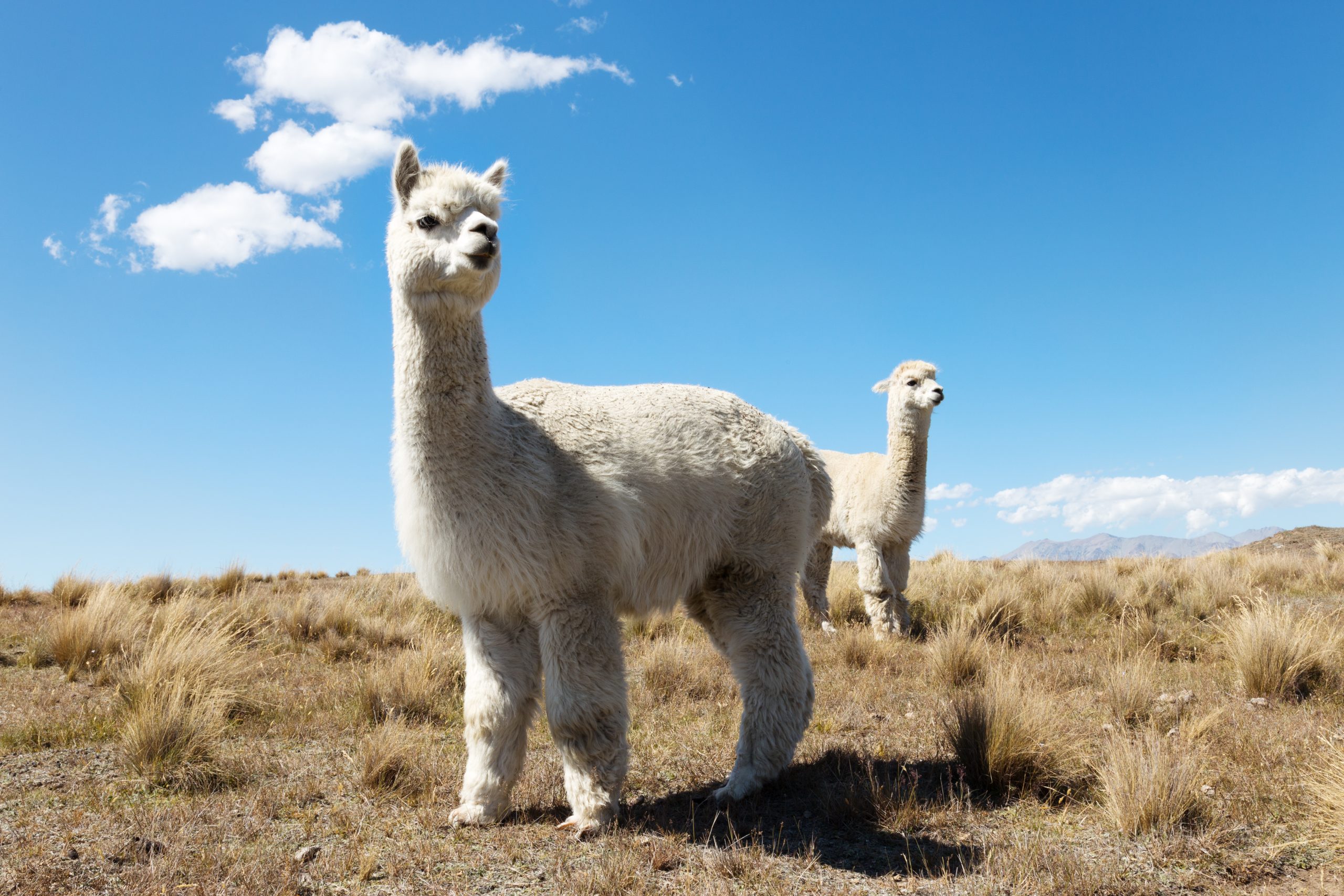
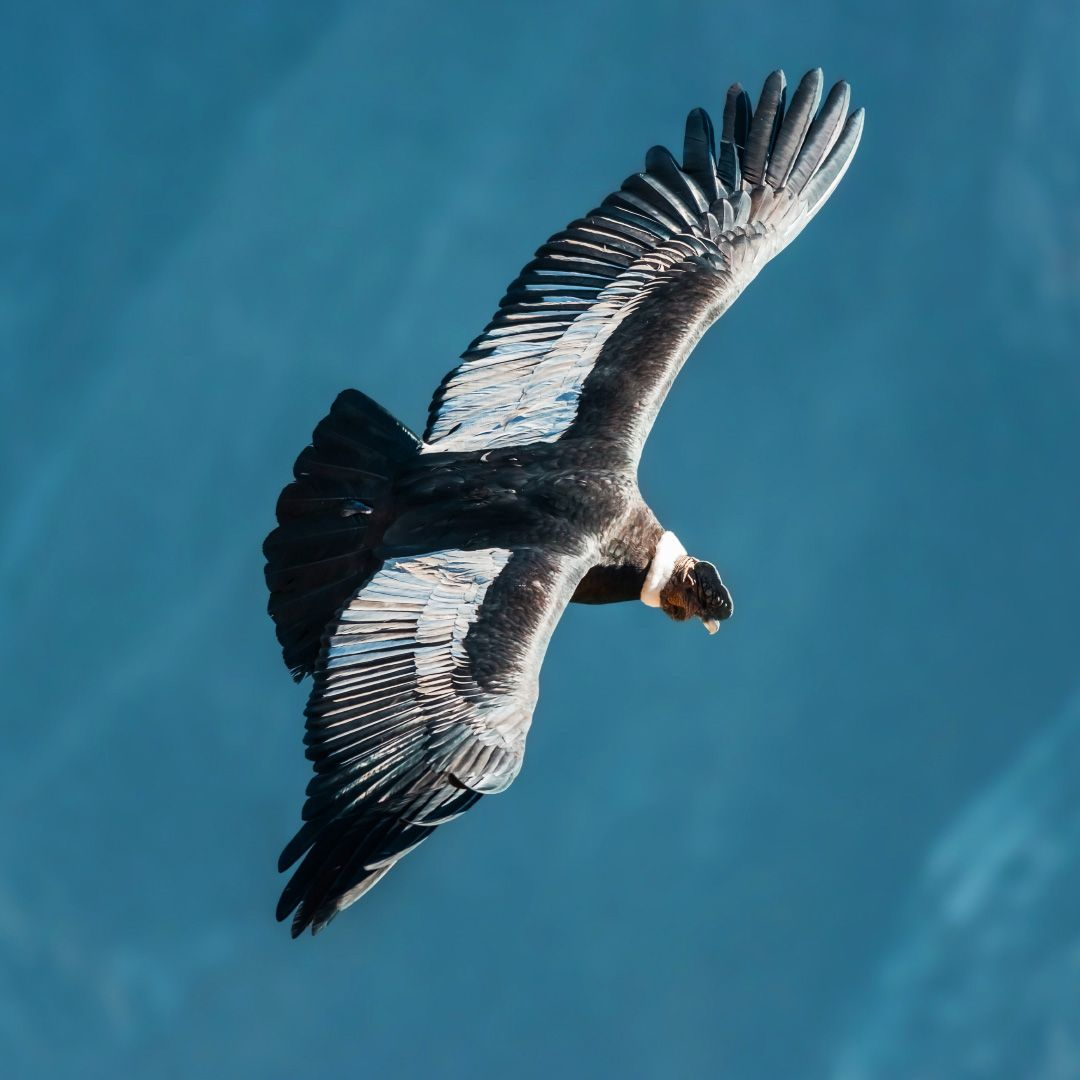
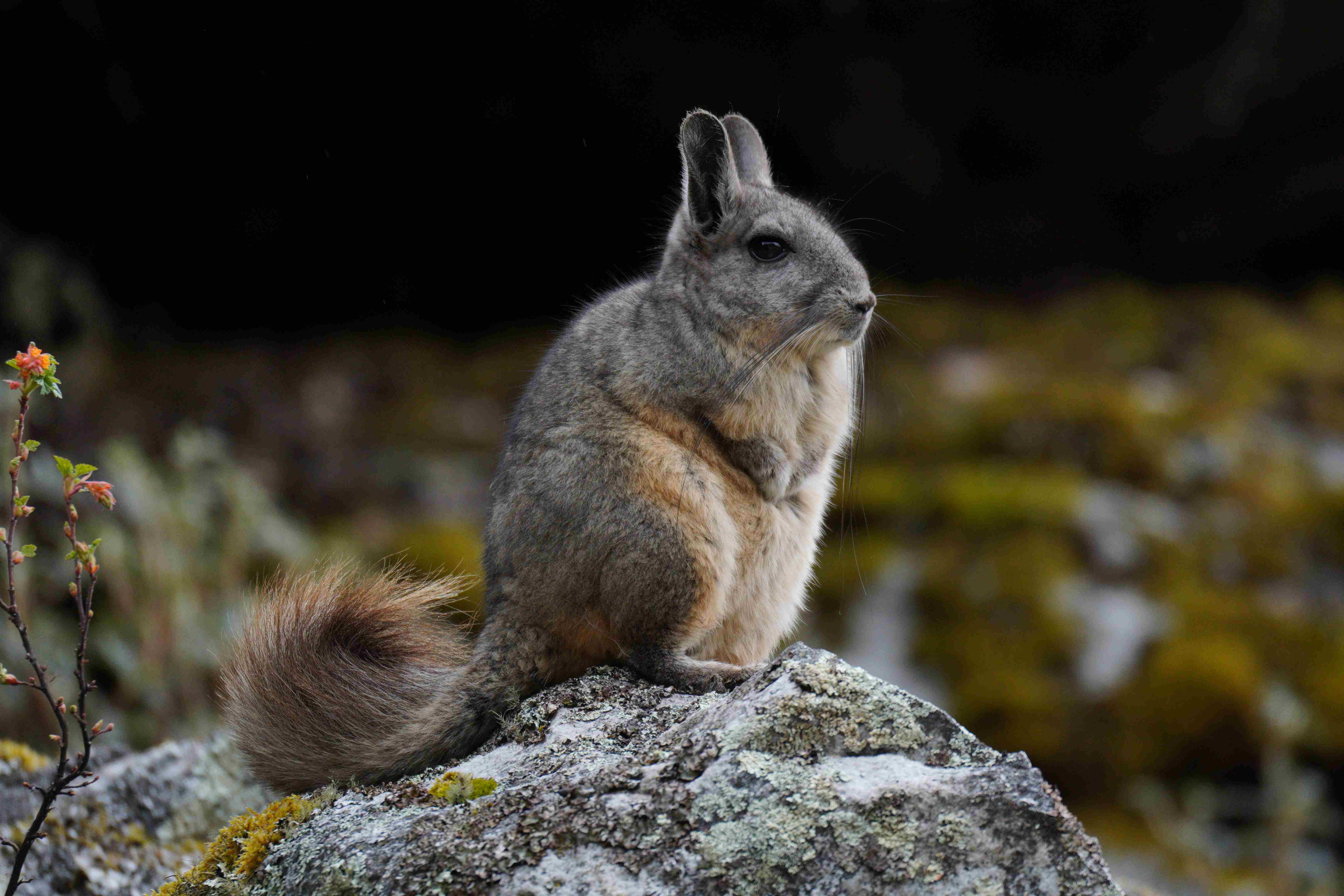
Llamas, alpacas, vizcachas, condors.
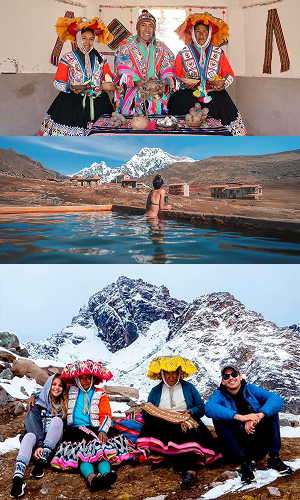
🧵 Living culture
Textile workshops in Pachanta, Ocongate, and Cacca using ancestral techniques.
💧 Pacchanta Hot Springs
Temperatures between 38 °C and 44 °C.
Relaxing and medicinal properties.
🏡 Community-Based Tourism
Stay with local families, take part in offerings to Pachamama, and learn Andean weaving in an authentic setting.
What to Bring
Safety Tips
🚨 Important recommendations:
- Acclimatize for 2 days in Cusco
- Walk at a steady pace
- Set up camp before 4 p.m.
- Respect ceremonial sites and wildlife
Curiosities
Ausangate in the Andean Worldview
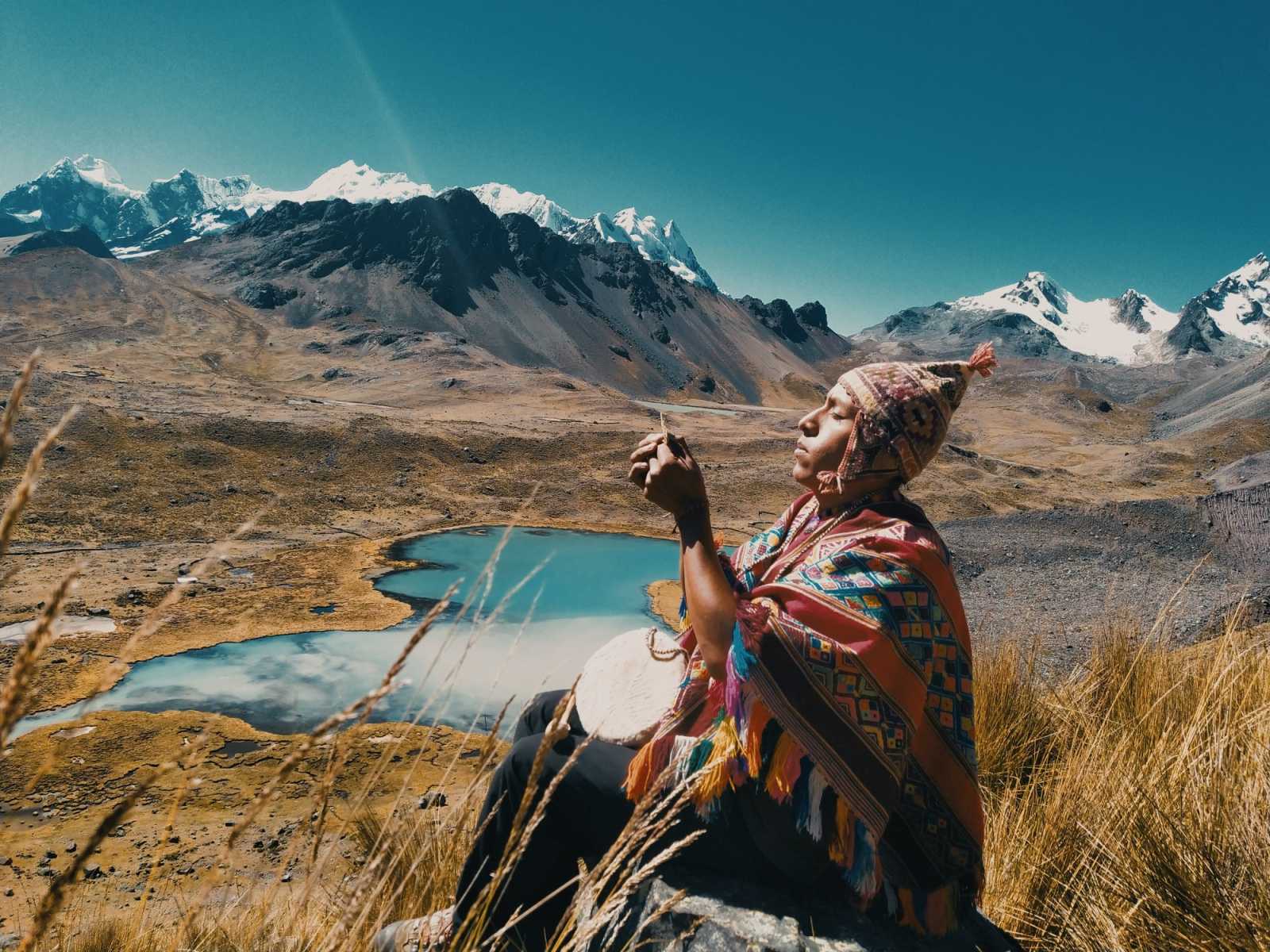
For the Quechua communities dwelling on its slopes, Ausangate is not simply a mountain: it is an Apu, a protective spirit that looks after the well-being of its people. It is the guardian of the waters, the provider of life, and the link between the earthly and the spiritual worlds.
Thanksgiving rituals, offerings of coca and chicha, and ceremonies seeking good harvests remain a fundamental part of community life, keeping alive a millenary tradition that transcends the bounds of time.
🙏 Spiritual connection: Ausangate represents the direct connection between human beings and natural forces, being considered a source of energy and ancestral wisdom.
Technical Data and Statistics
| Feature | Detail | Importance |
|---|---|---|
| Maximum altitude | 6,384 m a.s.l. | Fifth highest mountain in Peru |
| Massif extension | 100 km | One of the most extensive massifs in the Andes |
| Main lakes | 7 glacial lakes | Most popular trekking circuit |
| Minimum temperature | −10 °C or lower | Requires specialized gear |
| Trekking days | 5–7 days | Recommended complete route |
Tourism Impact and Conservation
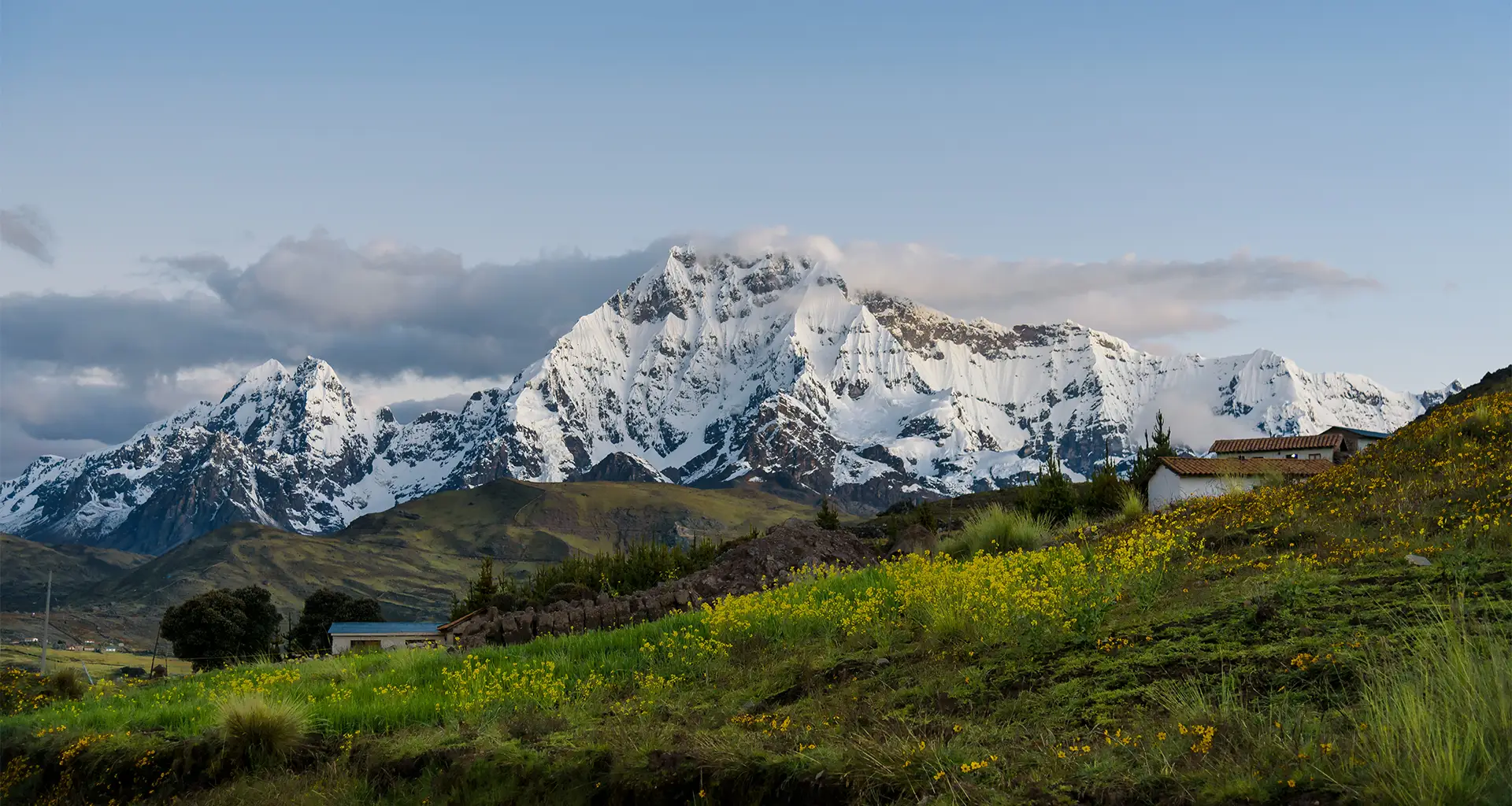
The growing tourist interest in Ausangate has brought both opportunities and challenges. Local communities have found in tourism an important source of income, offering guiding, lodging, and food services. However, it is crucial to maintain a balance that preserves both the fragile high mountain ecosystem and cultural traditions.
🌱 Responsible Tourism
It is essential to practice the “leave no trace” principle, respect the sacred sites of local communities, and contribute economically to the region’s sustainable development.
Ausangate: More than a Mountain
Ausangate is not just a destination; it is a physical challenge, a spiritual journey, and a connection with the essence of the Andes. Here you do not only walk—you change the way you feel, breathe, and look at the world.
Every step in Ausangate is an encounter with the sacred, every sunrise a revelation, and every moment an opportunity to connect with the greatness of nature and ancestral wisdom.
Walking toward Ausangate means finding yourself in a world where nature and the sacred intertwine, where shepherds live with snow gods, and where every step is a dialogue with the earth.